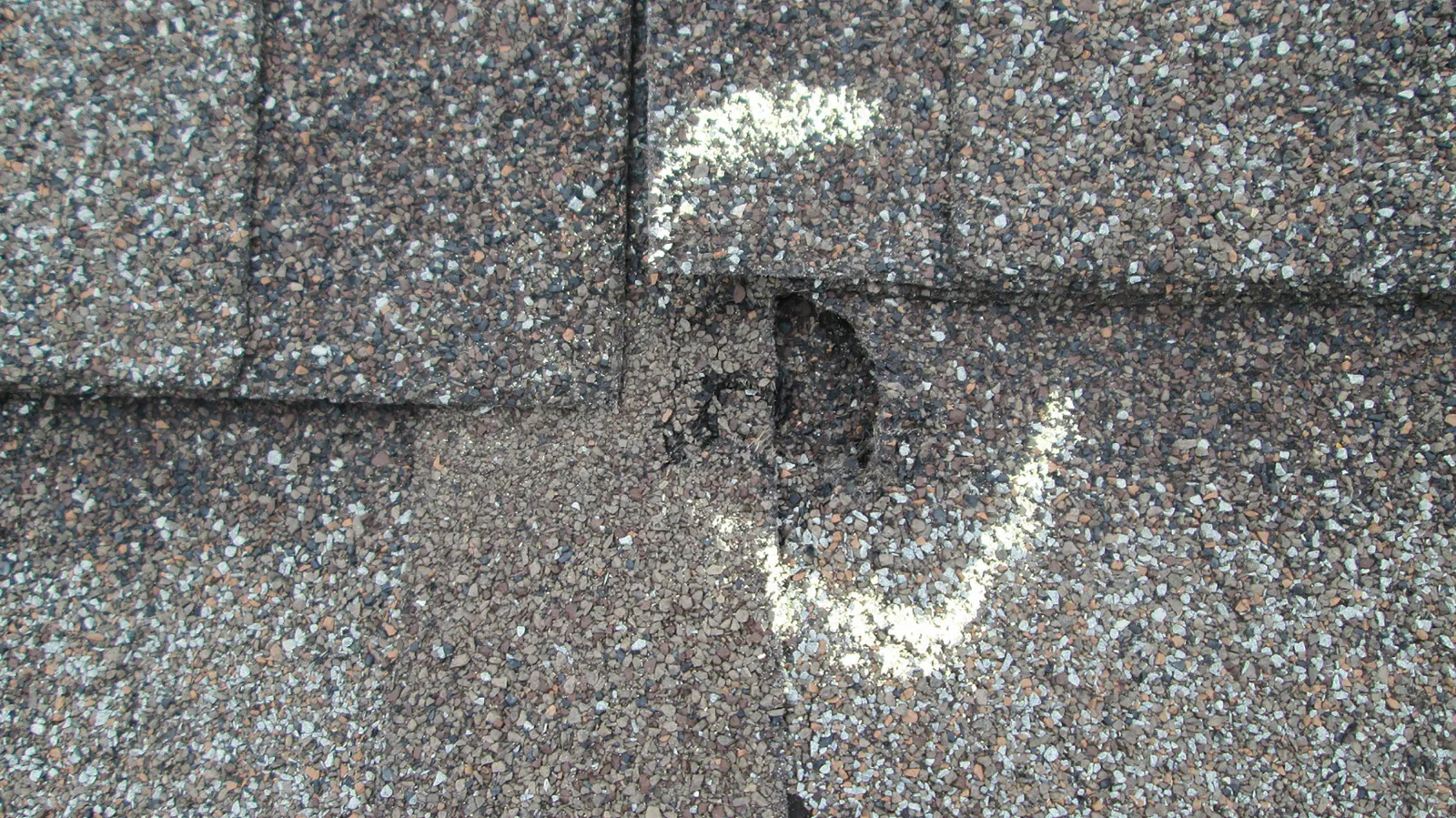
Hail impact
An impact can damage a shingle’s mat or surface. Marks on soft metal may help identify exposure, but a dented gutter is not proof of a particular amount of shingle damage.
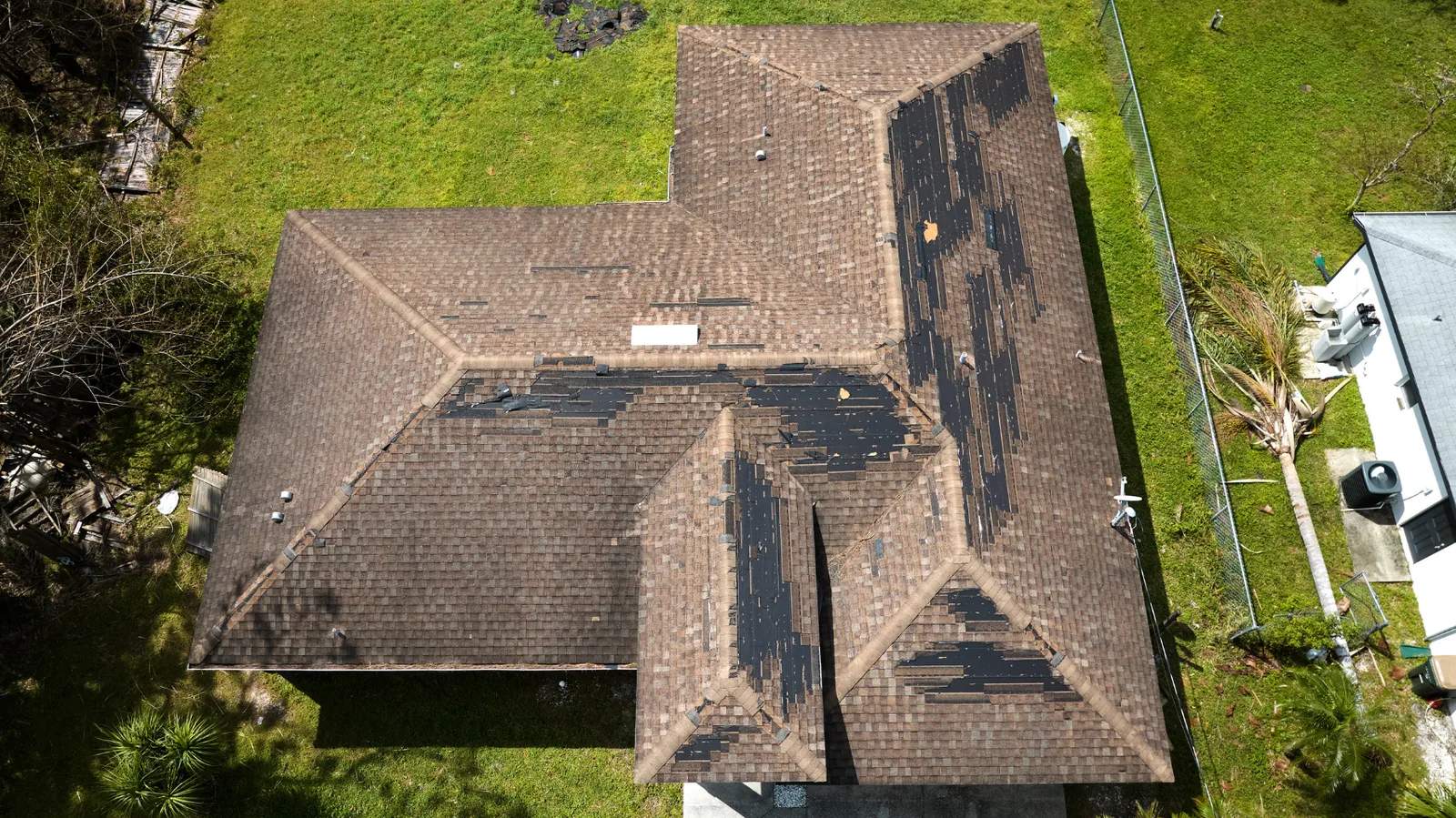
Missing shingles, debris or a roof you’re unsure about after hail and wind: request a free inspection in Benbrook and find out what needs attention.
A storm can leave obvious damage, but it can also leave a question. The roof may look normal from the street while a flashing has lifted or the shingle surface has been affected. A loud storm by itself does not establish damage to a particular roof.
The useful next step is to examine the roof’s present condition. A roofer can look at the concern, the surrounding materials and the difference between a localized defect and damage across a wider area.
Tell Benbrook Precision Roofing what you noticed and request a free inspection. You can start with a roofing question without first deciding whether to make an insurance claim.

An impact can damage a shingle’s mat or surface. Marks on soft metal may help identify exposure, but a dented gutter is not proof of a particular amount of shingle damage.
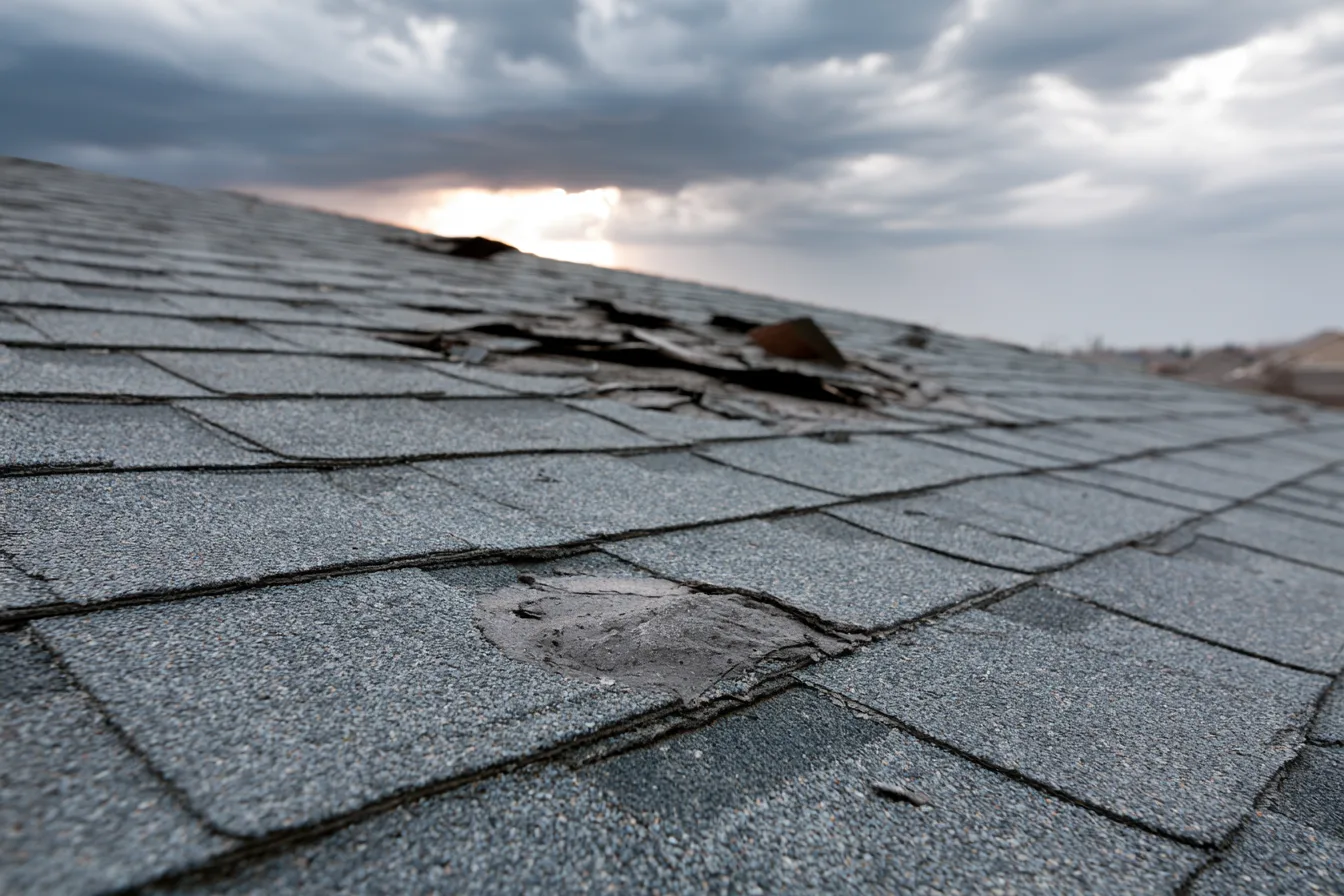
Lifted, torn or missing shingles can expose the layer beneath. A raised tab also needs its attachment and surrounding material examined.
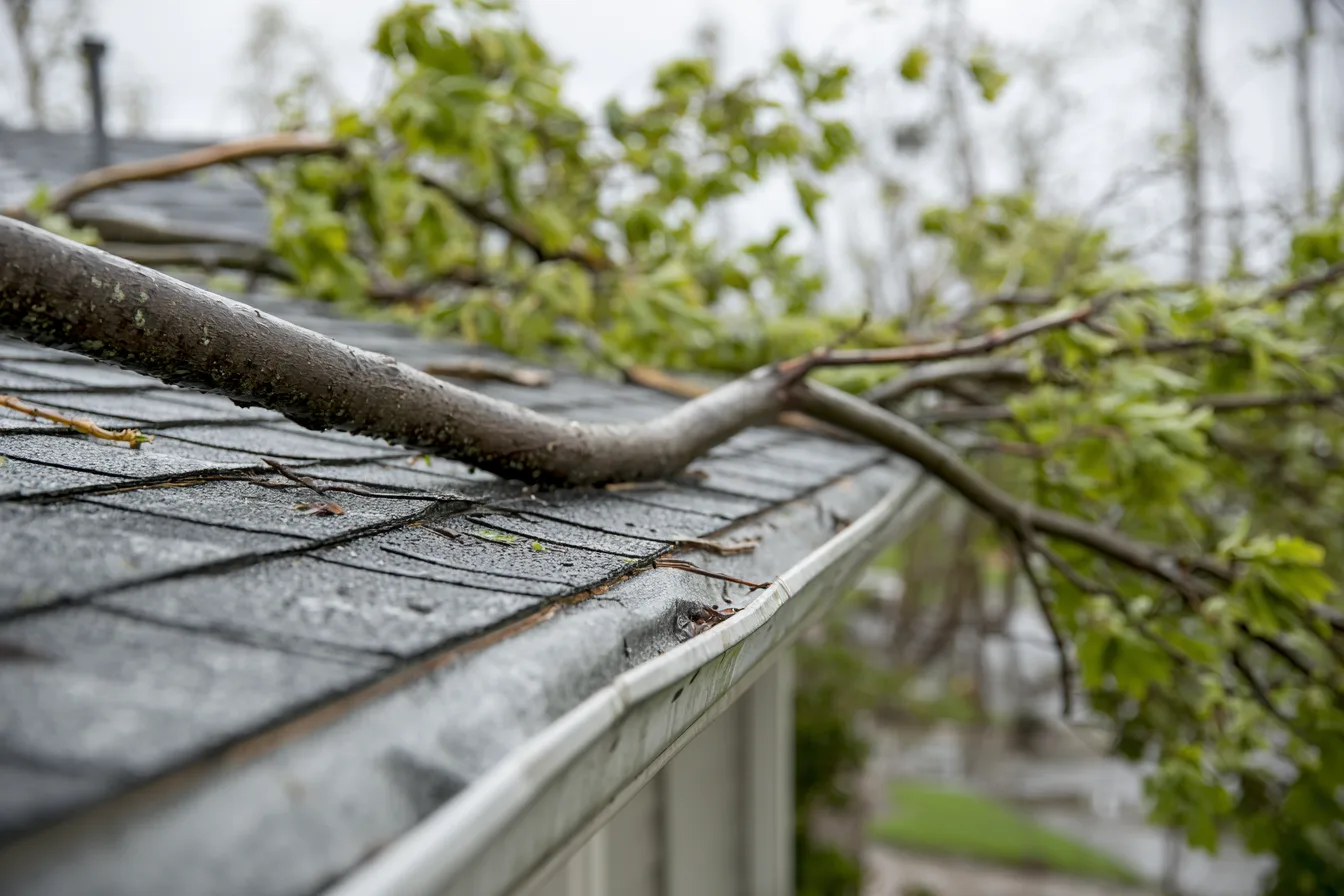
A branch can puncture or scrape roofing and load the structure below. Stay clear of unstable limbs and leave access to appropriate professionals.
Wear, foot traffic, old repairs and recent impacts can exist on the same roof. The inspection has to consider the pattern and condition rather than treating every missing granule as hail damage.
A surface examination does not automatically establish the exact date of a defect. It also does not decide insurance coverage. The roof’s work needs and the policy’s treatment of a loss are related questions with different decision-makers.
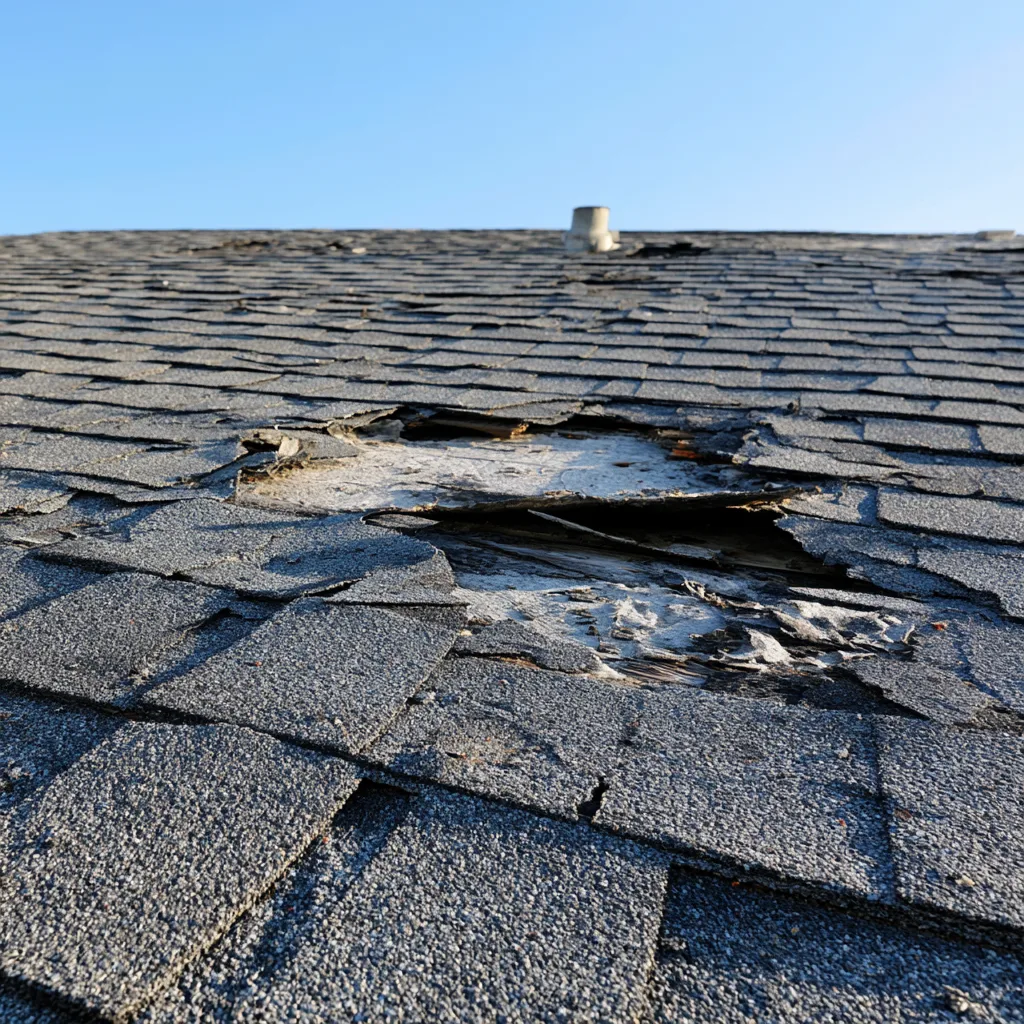
Describe what changed from inside or the ground. Do not climb onto a damaged roof.
A roof walk can put the visible condition and repair needs in context. Unsafe access can affect the timing or extent of the examination.
The roofing work follows the condition. If insurance is involved, the insurer determines coverage under the policy.
A targeted repair, partial work or replacement should address the actual damage and its connection to the remaining roof.
Deductibles, depreciation and policy terms change the amount you receive. Understanding them early helps keep the roofing budget separate from assumptions about an insurance payment.
Yes. A roof can have damaged material before water becomes visible inside. That makes an examination useful; it does not mean every hail-exposed roof needs replacement.
No. The insurer evaluates the loss under the policy, including cause, coverage, exclusions and deductible. A contractor’s assessment of roof work is not a coverage guarantee.
Texas law prohibits a contractor from waiving, rebating or absorbing an insurance deductible. Read the insurance guide for the payment distinctions and official Texas guidance.
It can, if the damaged area can be connected to sound surrounding material. The repair or replacement guide explains why condition matters more than an age rule.
Share what you noticed after the storm and where the property is. Request a free inspection to start with the roof’s condition.