Insulation and slope
Insulation contributes thermal performance and may also form the slope toward drains. Wet insulation needs attention rather than being concealed by a new surface.
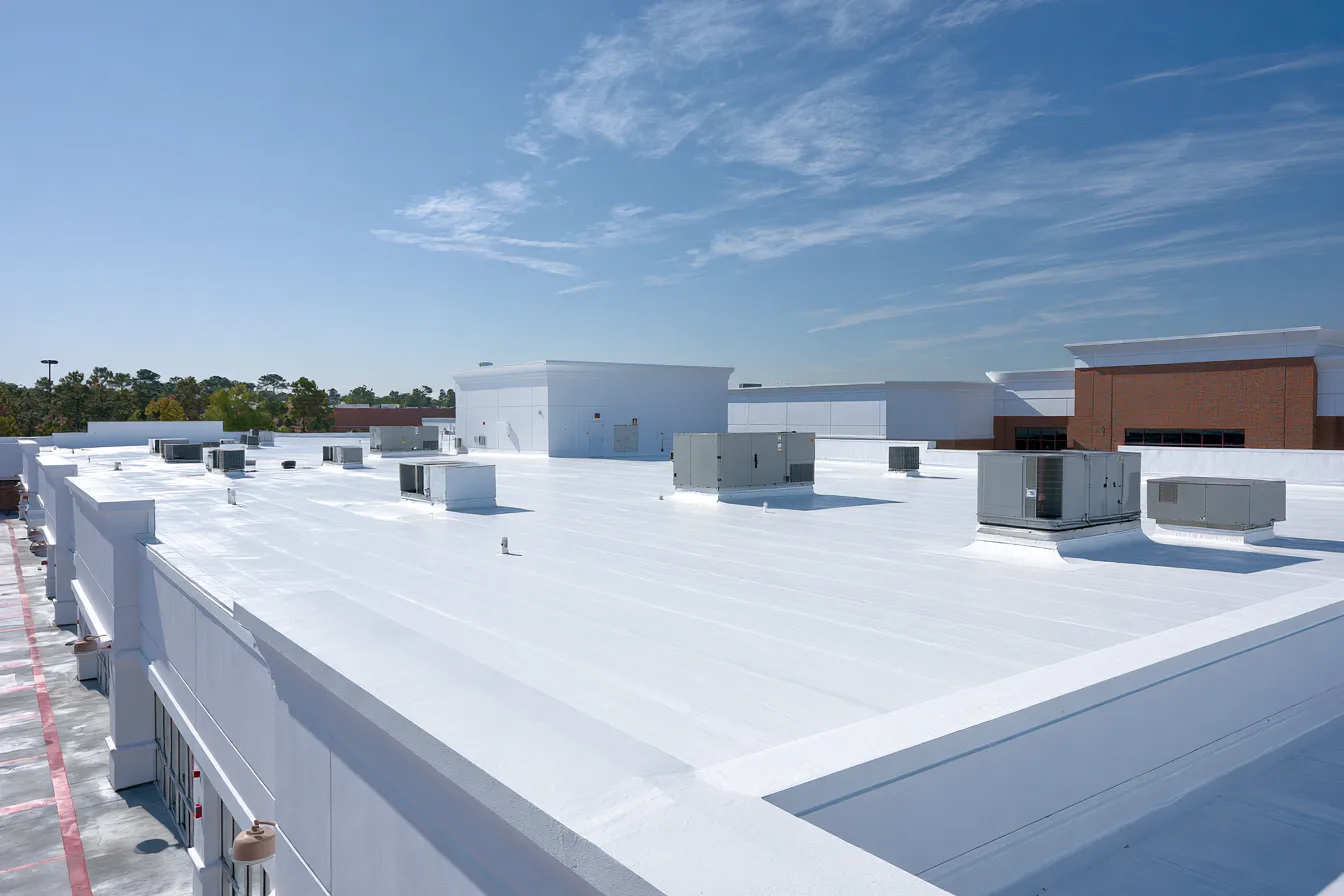
TPO roof work depends on more than the white surface. Get help understanding seams, curbs and the assembly beneath your Benbrook commercial roof.
TPO is a single-ply membrane whose sheets are joined with heat-welded seams. Across the field it can look continuous, but every drain, curb, edge and penetration requires its own connection.
A puncture in otherwise sound membrane can call for a compatible localized repair. Open seams, wet insulation or repeated failures at equipment can require a wider investigation. The membrane alone does not tell the full story.
Tell Benbrook Precision Roofing about the roof and building use. A free inspection can start the discussion of repair or replacement without assuming that the whole roof needs the same treatment.
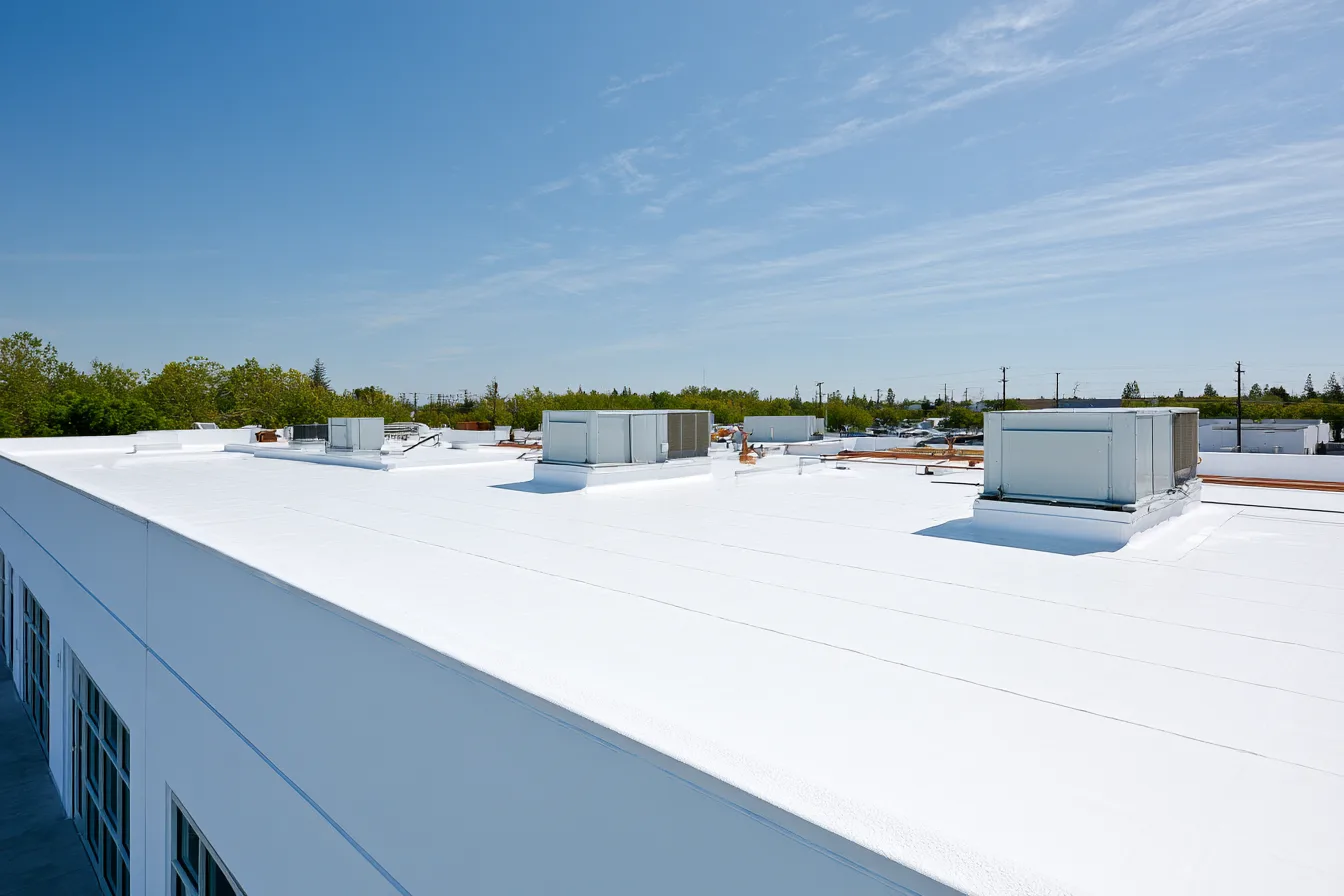
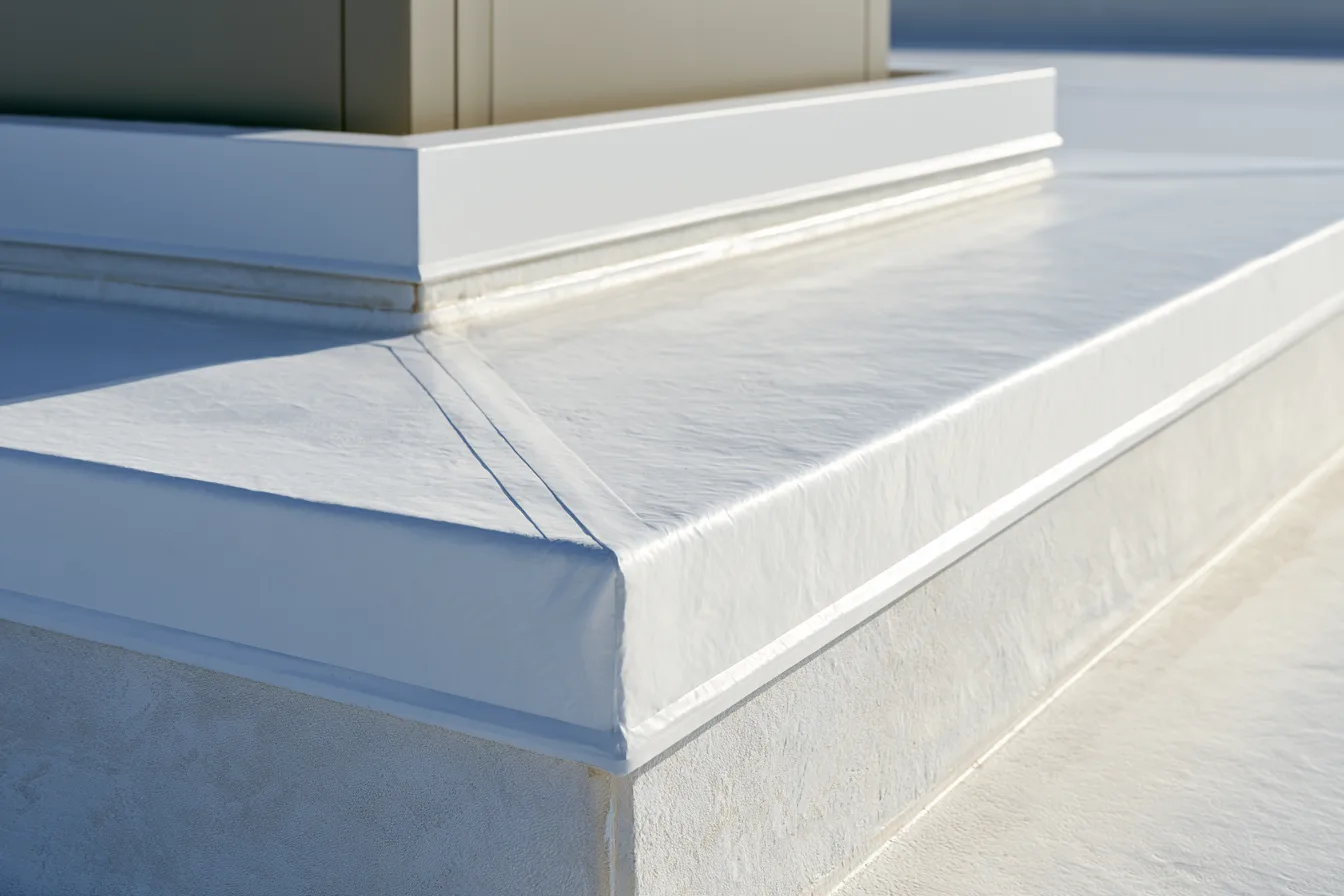
The seam joins adjacent membrane sheets. Compatible material and a properly prepared surface are needed for a reliable weld. Age, contamination and existing coatings can affect the repair method.
At a raised equipment curb, membrane must rise and terminate correctly so water stays outside the opening. Corners, transitions and attachments make this work more involved than a flat patch in the field.
Generic sealant is not a substitute for evaluating the membrane and its connections. The repair needs to restore the water barrier at the failed detail and connect it to sound surrounding material.
The roof beneath the membrane determines how the completed system is supported, insulated and attached.
Insulation contributes thermal performance and may also form the slope toward drains. Wet insulation needs attention rather than being concealed by a new surface.
A cover board may provide a suitable surface and protection as specified in the assembly. The roof deck still has to be sound enough for the selected system.
Mechanically attached, adhered and other approved assemblies have different requirements. Deck type, wind design and manufacturer details influence the choice.
The perimeter must keep the membrane securely connected and direct water correctly. The attachment at an edge is part of the system, not a finishing decoration.
Relate leaks and roof observations to drains, seams, equipment and previous repair areas.
The scope should distinguish a membrane repair from insulation, deck or drainage work underneath it.
Service traffic needs a planned route and any specified walkway protection. Avoid treating the whole membrane as an unrestricted work platform.
Some coating systems can be used on eligible TPO substrates after preparation, testing and necessary repairs. Product-specific compatibility matters. See roof coating suitability before assuming that an old membrane can simply be covered.
Reflective roofing can affect heat absorbed at the roof, but the building’s insulation, climate, HVAC and use also influence energy consumption. No particular savings are promised here.
Thickness is one specification. Attachment, reinforcement, details, traffic and warranty requirements also influence the system. The selected assembly has to fit the building as a whole.
Often that is the question to investigate first. The surrounding membrane must be suitable for a repair, and water below the puncture may need separate attention.
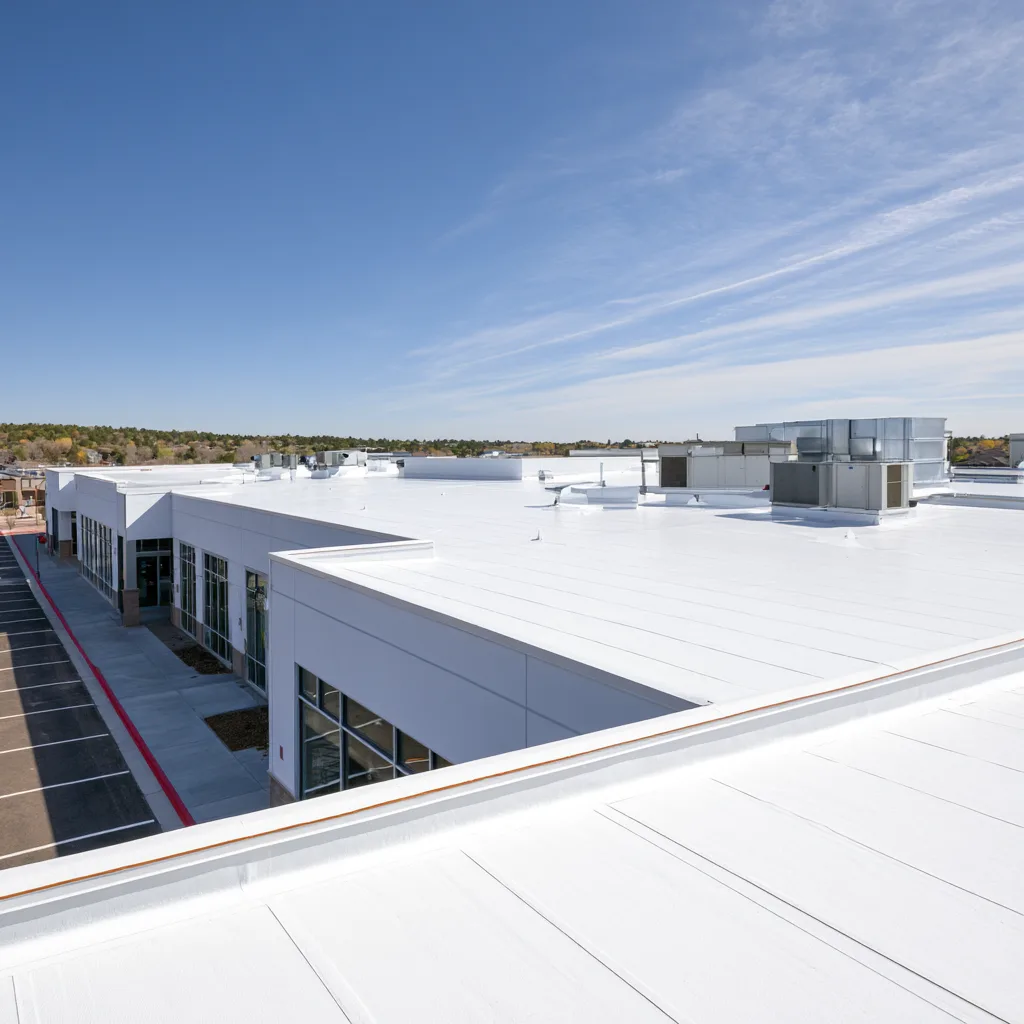
Describe the leak, damaged area or replacement project and share the building location. Request a free inspection to begin.