Pipes and equipment
A penetration needs a compatible flashing detail that accounts for water flow and panel movement. Random fasteners or sealant on the panel surface can create additional service points.
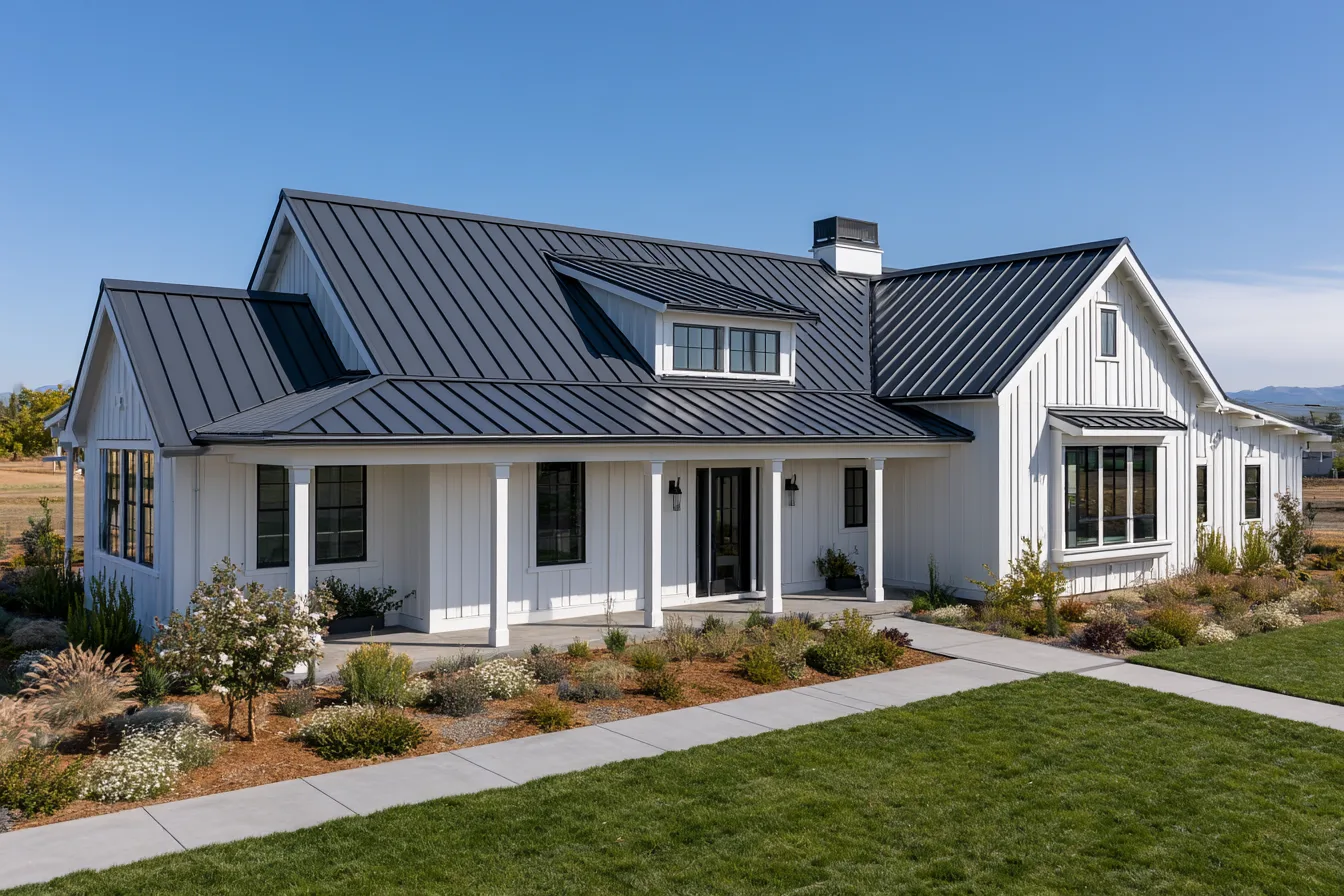
Standing seam, exposed fasteners and metal roof details have different requirements. Explore the options for your Benbrook property and request a free roof inspection.
Metal roofing is a system of panels, connections and transitions. A long uninterrupted panel still has to meet an eave, turn at a ridge and connect around any pipe or wall in its path.
The attachment method changes how the roof moves and where maintenance may be needed. That is a more useful starting point than choosing metal solely for a promised lifespan.
For a new metal roof or a repair to an existing one, the roof slope, substrate and details need to be considered with the panel. Tell us what you have now and what you want the work to accomplish.
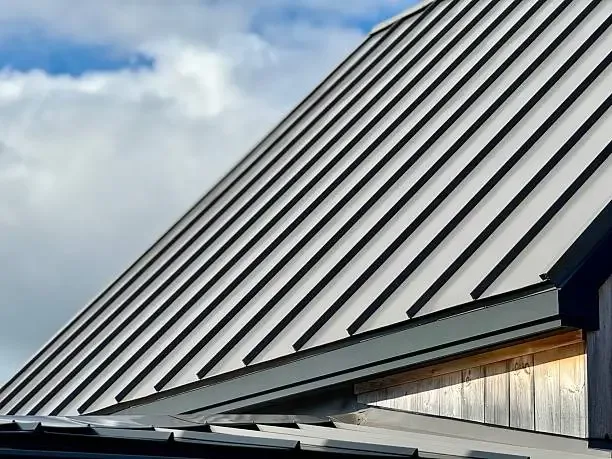
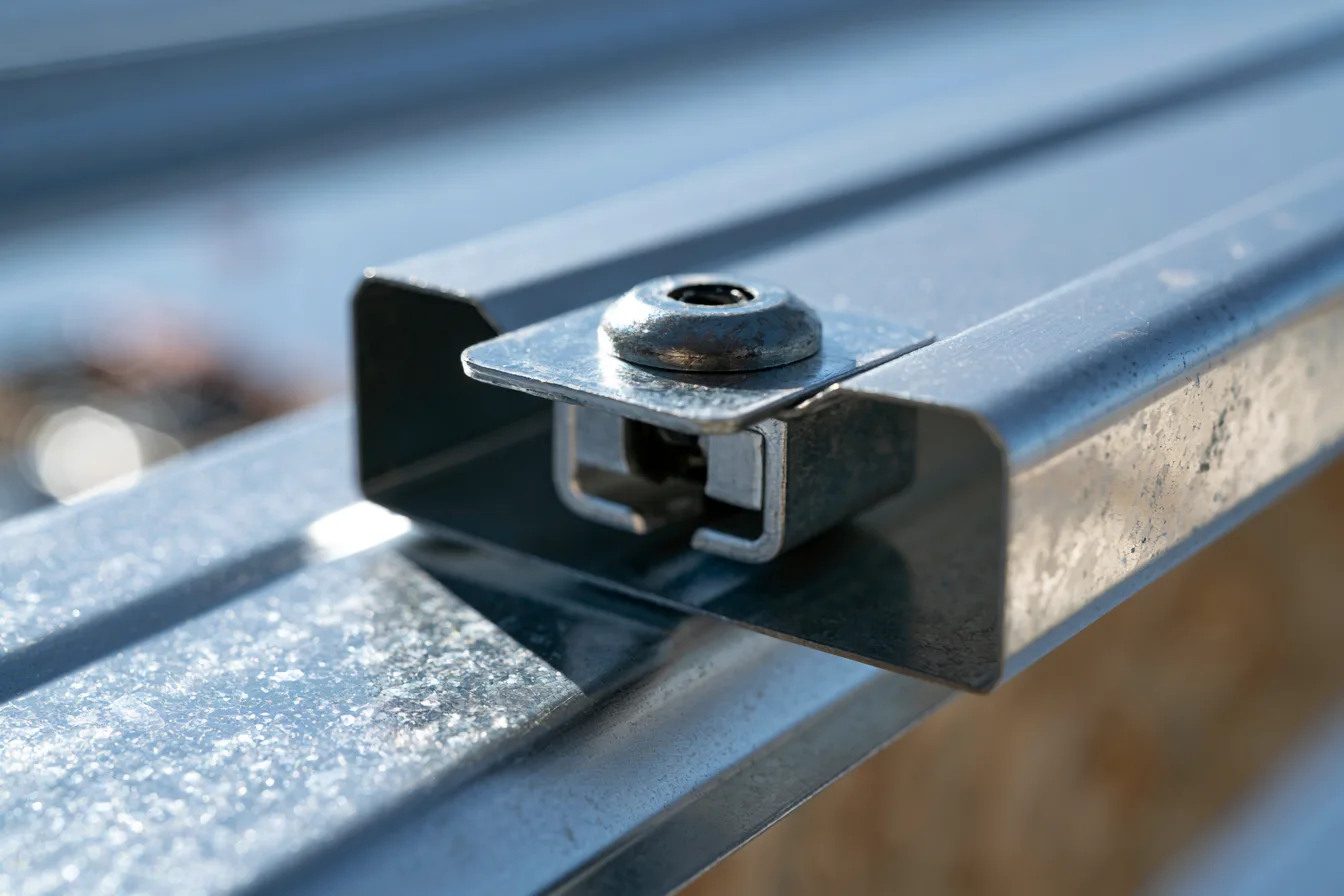
Metal expands and contracts as its temperature changes. A standing-seam system may use sliding clips so the panel can move while the clip base stays attached to the structure.
The details at ends and penetrations must work with that movement. Restraining a panel in the wrong place can transfer stress into a seam or flashing. The right connection depends on the specific panel and design, not a universal screw pattern.
MBCI’s thermal movement guidance describes why clips and the surrounding details must be considered together.
A penetration needs a compatible flashing detail that accounts for water flow and panel movement. Random fasteners or sealant on the panel surface can create additional service points.
The ends and profile openings must be closed and flashed according to the system. Wind-driven water can exploit poorly resolved edges.
The assembly beneath the metal affects condensation control, attachment and the completed roof. Installing panels does not remove the need to examine those layers.
These signs call for an examination of the affected connection and surrounding roof. They do not all require the same repair.
A localized defect may be repairable with a compatible detail when the panel and substrate are sound. Widespread corrosion, repeated failed patches or movement problems can require a broader plan.
That is a project-specific question involving the existing roof, substrate, weight, moisture, installation instructions and applicable requirements. Concealing an unsound or wet assembly is not a solution.
The complete assembly matters, including decking, insulation and the space below. A panel on an open structure behaves differently from a roof over a finished home. Discuss the construction rather than relying on a general promise.
No. Metal can dent or be damaged. Product testing, finish and weather-tightness terms are different matters, and cosmetic damage may be treated differently from a leak.
Panel type and roof details can change the installed price substantially. The roof cost guide explains how to keep material comparisons tied to the same complete work scope.
Share the type of property, whether the roof is already metal and the concern or project you have in mind. Start with a free roof inspection.